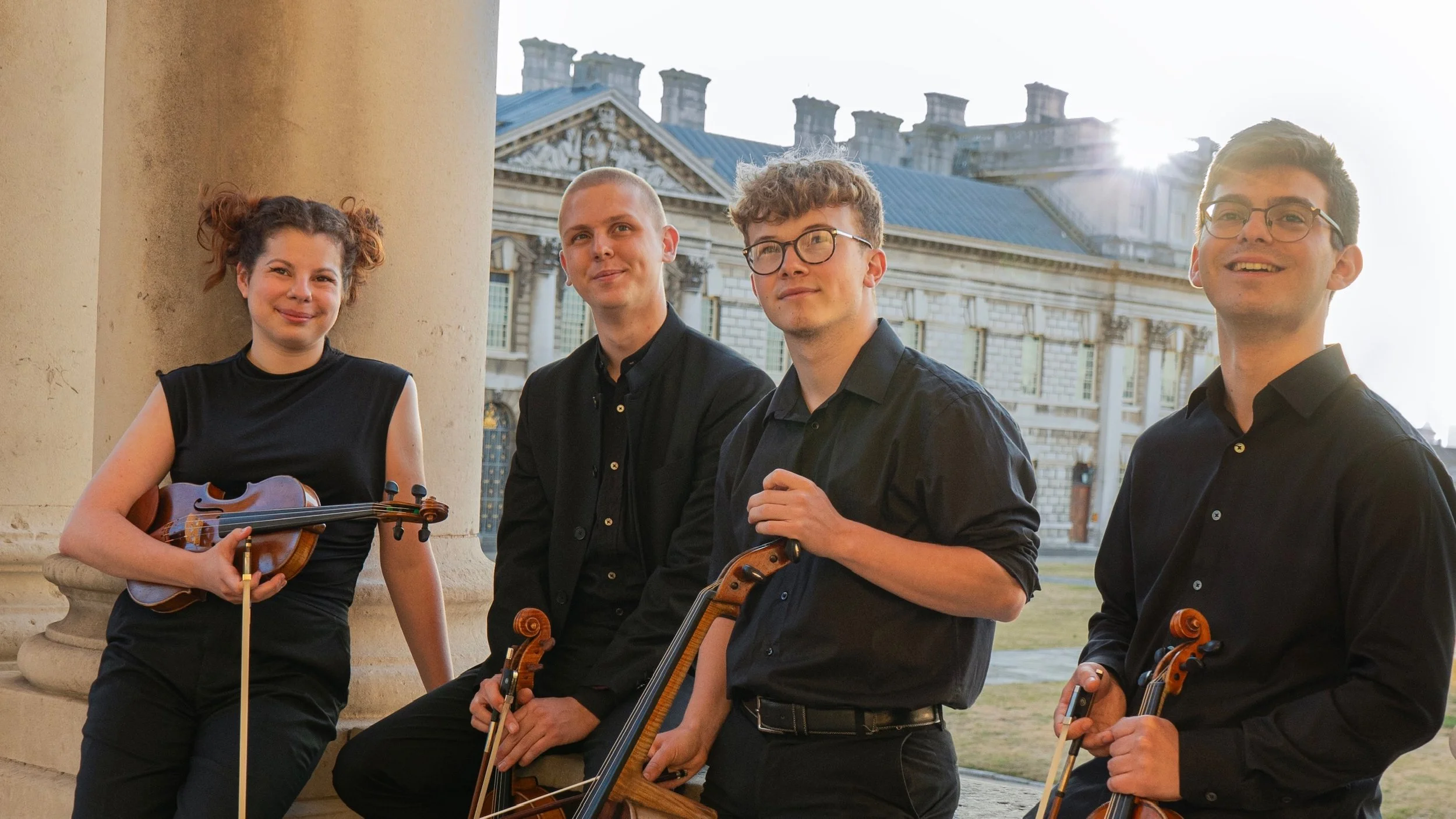
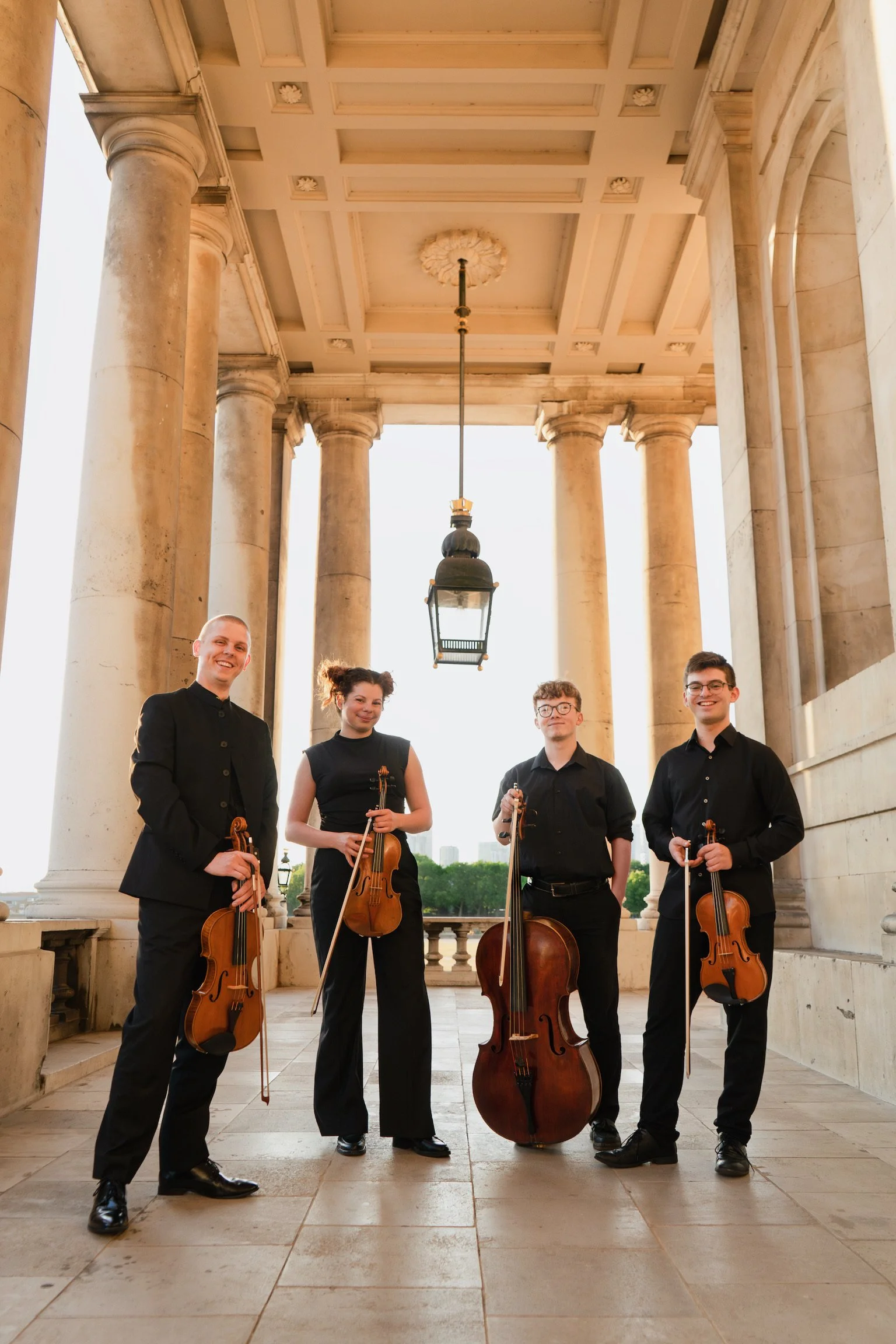
Holtág Quartet
“... inspiring with the rich tones of the instruments blending beautifully.”
About
The Holtág Quartet is a London-based string quartet formed at Trinity Laban Conservatoire, where they were selected as the pilot ensemble for the specialised Ensemble Pathways course under a full scholarship from Philip Carne MBE.
Within their first year, the quartet was awarded the Sir John Barbirolli Prize for String Quartets and reached the finals of the 2025 Cavatina Intercollegiate Competition at Wigmore Hall.
The ensemble made their broadcast debut on BBC Radio 3’s In Tune and has performed at notable venues including the Painted Hall, Queen’s House, and for the Hungarian Consulate. Their technical development is supported by intensive coaching from members of the London Symphony Orchestra, the Carducci and Piatti Quartets, and the Linos Piano Trio. The quartet’s repertoire is characterised by its breadth, balancing foundational works by Haydn and Beethoven with significant contemporary compositions by Philip Glass, Elizabeth Maconchy, and George Crumb.
Projects
Experimental & Multidisciplinary Projects
The quartet specialises in high-concept, multidisciplinary performances that integrate chamber music with external art forms. A central project in their repertoire is George Crumb’s Black Angels, a technically demanding work involving electric instruments and extended performance techniques. The Holtág Quartet has evolved this work into a staged production by collaborating with dancers and bespoke choreography, creating an immersive, theatrical experience.
Contemporary & Canonical Recitals
The quartet’s core concert programming juxtaposes 20th-century and contemporary masterpieces with the classical canon. Current repertoire includes works by Ravel, Kodaly, and Webern, alongside earlier explorations of Haydn and Vaughan Williams. The ensemble emphasises high-precision performances of both standard repertoire and lesser-performed modern works, delivering curated programs for concert series, universities, and international cultural institutions.
News