
Earning the Room: How Concerts Are Adapting to a Distracted Audience
The concert hall used to have a monopoly on your attention. It doesn't anymore, and the artists figuring out what to do about that are the ones worth watching.
There was, for most of the hall's history, nowhere else to be during those two hours, and nothing else competing for the eye or the ear. That's no longer true. Every audience member now arrives having spent their day inside an environment engineered to fight for their focus every six seconds - and they carry that conditioning into their seat. Pretending otherwise, or treating it as a decline to be mourned, misses what's actually an interesting problem: how do you hold a room when the room has been trained not to sit still?
This isn't really a story about shortened attention spans in the lazy, scolding sense that phrase usually implies. It's a story about a listening public with more options, more context-switching, and a different relationship to how information and emotion get delivered to them - and about the ensembles who are treating that shift as a creative brief rather than a threat.
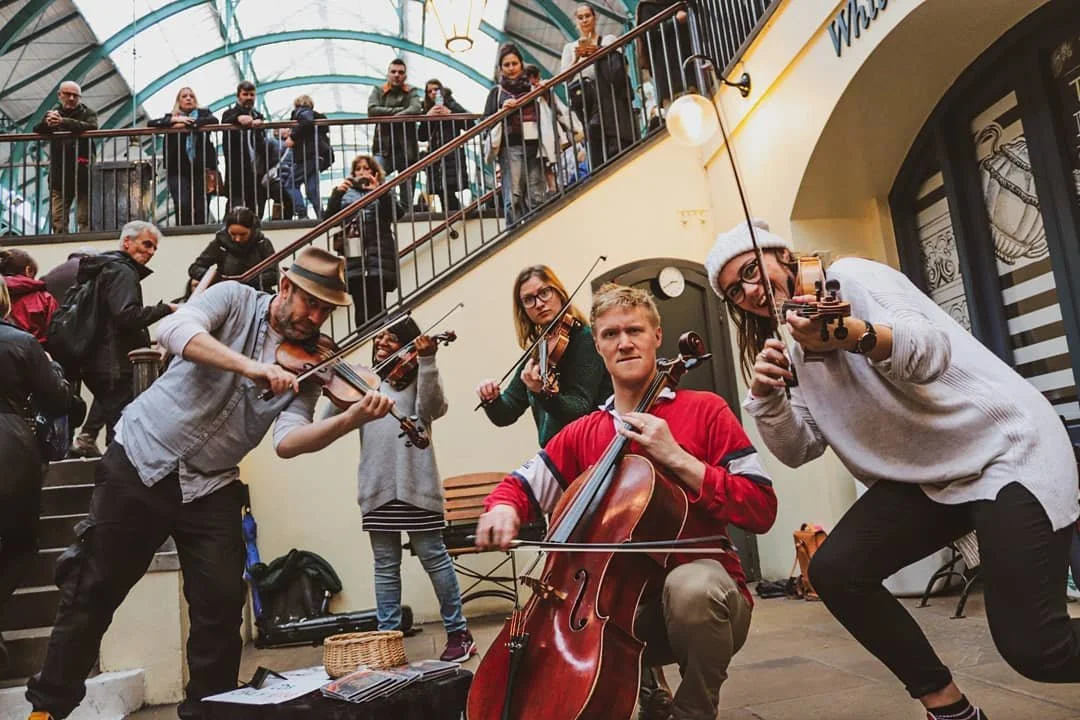
O-M Strings are famous for their high energy performances
The format itself is being tested
You can see the pressure showing up directly in programming decisions. Orchestras are experimenting with shorter running times, tighter interlocking movements, and formats that drop the traditional interval altogether; not as a concession, but because the data increasingly backs it up.
Recent experimental work out of the Max Planck Institute for Empirical Aesthetics found that concert formats measurably change how audiences experience a performance, with the strongest effects showing up precisely when a format breaks from convention. The Royal Philharmonic's own audience research pointed the same way: when asked what would make the modern concert experience better, listeners flagged shorter concerts and clearer digital information ahead of the show as some of the most wanted changes. Melbourne Symphony Orchestra's "Quick Fix" series (built around short, high-context evening concerts) has leaned directly into this, aiming at an audience whose attention, as their own team put it, is often "functioning at a reduced capacity" after a full day of work, and building real musical satisfaction around that constraint rather than despite it.
None of this means shrinking the ambition of the music. It means being honest that pacing, sequencing and framing are now part of the composition of an evening, not an afterthought to it.
Visual literacy is no longer optional
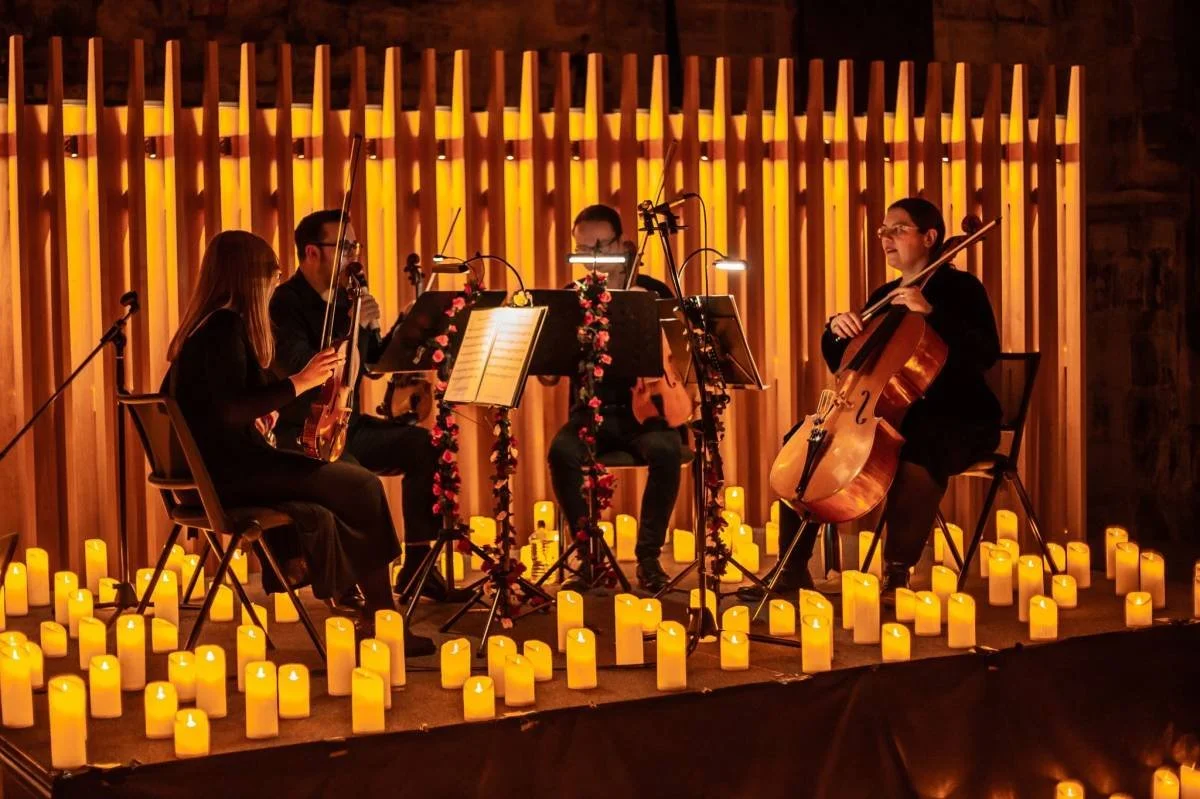
The ‘Concert by Candlelight’ format has seen a burst in popularity in recent years
The other shift is less discussed but arguably more disruptive: classical musicians are now, whether they signed up for it or not, visual performers. The League of American Orchestras has tracked a real rise in younger patrons buying tickets, and the institutions leading that shift, the Minnesota Orchestra chief among them, got there by hiring dedicated content creators and putting musicians on camera between rehearsals, not by changing the repertoire. The results have been substantial: one orchestra's Instagram audience nearly tripled over a few years once it started filming its players as people rather than as performers behind glass.
The same pattern holds at the individual artist level. Some of the most visible classical musicians working today, didn't get there by simplifying their playing. They got there by understanding that a phone screen is now most listeners' first point of contact with a piece of music, and that the visual framing of a performance (the angle, the intimacy, the sense of watching something real happen) is doing real work alongside the sound. Industry data on independent artists backs this up starkly: musicians who post short-form video consistently see multiples of the streaming traffic of those who don't. This isn't vanity content. It's the modern equivalent of a poster outside the hall, except now the poster follows the listener home.
For artists and ensembles, this means visual identity, including how a rehearsal is filmed, how a stage is lit, how a moment is framed for a fifteen-second clip as much as for a two-hour concert, has become part of the craft itself, not a marketing bolt-on handled by someone else after the fact.
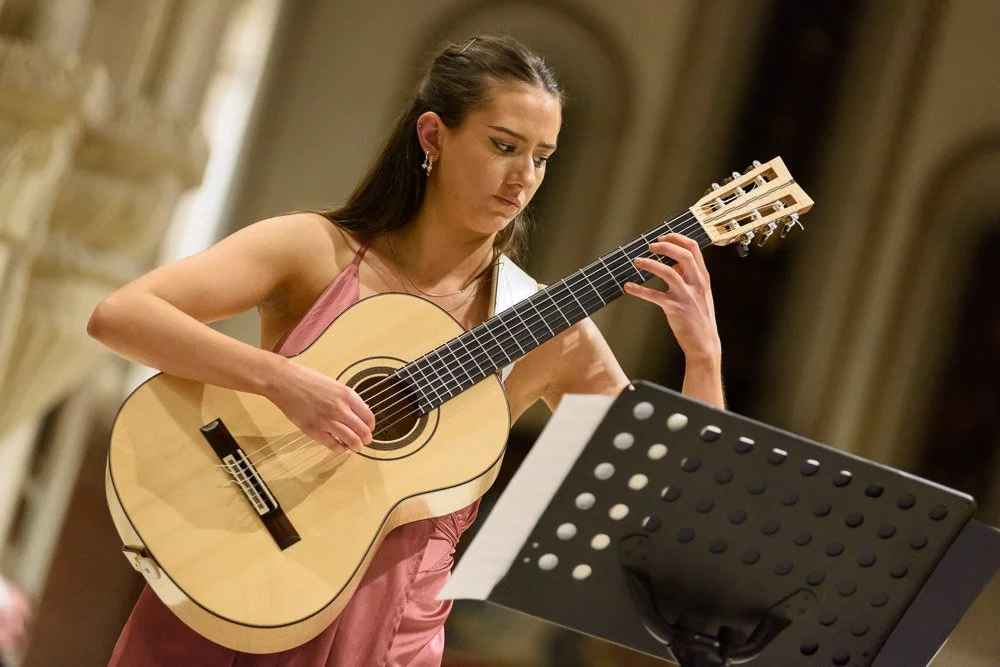
Classical Guitarist, Zoe Barnett, is notable for playing whilst standing
What this looks like when it's done with intent
You can see both of these pressures, pacing and visual framing, answered well without any loss of seriousness. At Conway Hall a few weeks ago, Quartet Concrète closed their summer season by placing Schubert's Death and the Maiden directly alongside the sharper textures of Benjamin Britten, rather than working through the repertoire in chronological order. The effect wasn't gimmicky; it was structural. Placing two pieces in conversation by mood and tension, rather than by date, gave the evening a shape an audience could actually follow and feel; which is exactly the kind of "unexpected sequence of events" the recent format research suggests keeps listeners engaged for the length of a programme.
Genre-crossing artists are answering a related pressure: today's listener doesn't experience music in separated lanes, and doesn't expect the artists they follow to either. Shirley Smart's cello work, shaped by a decade spent inside North African and Middle Eastern musical traditions, isn't a classical player borrowing from another idiom for a night; it's a genuinely continuous practice, and audiences who've grown up moving fluidly between playlists respond to that authenticity rather than to a marketing "fusion" label. Pianist Rob Barron's ability to move between the discipline of mid-century American jazz and the precision of modern session and screen work works the same way: versatility isn't a compromise, it's a credible answer to an audience that no longer sorts music by category.
Where Toulston Music sits in this
This is the environment our artists are actually working in. Not a nostalgic one where the concert hall can assume its own importance, but a genuinely competitive one where format, framing and visual presence all now sit alongside musicianship as part of the job. At Toulston Music, we represent artists and ensembles who are meeting that environment head-on: musicians building real digital presence without diluting their playing, and programmes built around emotional logic rather than habit.
The concert hall isn't dying. It's having to earn its two hours again - and the artists who understand that are the ones worth watching.
